

I Saw More Than a Baseball Story. I Saw a Movement.
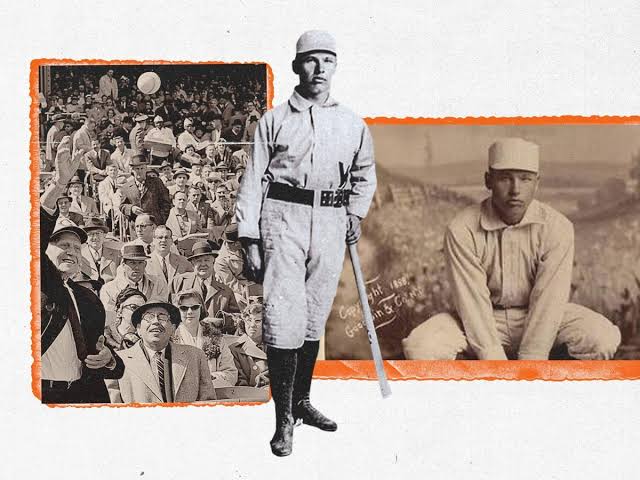
When I first learned about William “Dummy” Hoy, I immediately saw something bigger than baseball.
Here was an extraordinary athlete whose accomplishments had largely escaped the national conversation for more than a century. The more I learned, the more obvious the opportunity became.
Deafinitely For All Entertainment had come to us to help build his campaign for the Baseball Hall of Fame. But I believed the story had the potential to go much further than that. I saw the makings of a cultural movement.
Hoy played 14 seasons of Major League Baseball, recorded 2,048 hits, stole 596 bases, and finished his career with a .386 on-base percentage. He was also Deaf, competing at the highest level during an era without modern accessibility tools or the accommodations athletes have today.
Yet more than a century later, most baseball fans have no idea who he was.
I knew the story was already extraordinary. The opportunity was making the world recognize it.
A petition can generate signatures. A publicity campaign can generate headlines. But building a movement requires something more. It requires connecting a story to culture in a way that makes people genuinely care.
At FLEXDEF, we don't wait for culture to tell us what's relevant. We identify opportunities others overlook and build the strategies that make people pay attention.
That's exactly what we set out to do with Dummy Hoy.
An Extraordinary Story Hiding in Plain Sight
Hoy's accomplishments speak for themselves.
His legacy is also tied to the history of visual communication in baseball, including the hand signals used by umpires today. Historians have debated the exact extent of his influence, but his place in the broader story of accessibility and communication in baseball is undeniable.
But what interested me was that his story went far beyond baseball history.
It was about athletic excellence, Deaf history, representation, perseverance, and the question of whose contributions get remembered.
Hoy also already had passionate advocates. Historians, members of the Deaf community, and baseball fans had worked for years to preserve his legacy.
Our job wasn't to replace those voices.
It was to amplify them.
We weren't trying to manufacture a legacy. Hoy had already earned that. We were working to manufacture the attention his legacy deserved.
That became the foundation of the campaign.
We built a strategy that connected sports, entertainment, creators, athletes, journalists, baseball historians, and the Deaf community. Each group had a different reason to care.
Baseball historians could speak to the significance of Hoy's career. Deaf advocates could speak to his legacy and representation. Umpires could explore his connection to the game's visual language. Athletes and creators could introduce him to an entirely new generation.
The objective was simple: make Hoy relevant to people who didn't yet know why they should care. And it started working.
In September alone, Sign For Hoy generated more than 100 million impressions across social media, press, and other channels, with coverage from USA TODAY, The Athletic, Sports Illustrated, Page Six, MLB.com, and others.
Creators, athletes, journalists, and major figures from baseball and entertainment joined the conversation. Troy Kotsur, Curtis Pride, Albert Pujols, Marty Brennaman, Ken Rosenthal, Tyler Kepner, Bob Nightengale, and others all helped push the story further.
Those weren't random publicity hits. They were part of a deliberate effort to build credibility, momentum, and cultural relevance around a story that deserved all three.
At FLEXDEF, we call it cultural engineering.
Publicity gets people talking for a moment. Cultural relevance gives them a reason to keep talking.
Bigger Than a Campaign
The ultimate objective is clear. We want William “Dummy” Hoy inducted into the National Baseball Hall of Fame.
His next opportunity comes through the Classic Baseball Era Committee, which is scheduled to vote in December 2027 for the Hall's Class of 2028. We can't control that outcome. Hall of Fame induction ultimately has to be earned on the merits of a player's career.
But we can make sure those merits are understood.
We can make sure more baseball fans, journalists, athletes, and influential voices within the sport understand the full scope of Hoy's accomplishments and legacy.
And even beyond the Hall of Fame, I believe this campaign can accomplish something important.
Hoy's story can inspire young Deaf athletes. It can introduce a new generation to one of baseball's most remarkable figures. And it can force people to reconsider how many important stories get lost simply because nobody found the right way to tell them.
That's also why the upcoming short documentary Hoy matters so much.
We wanted the story to feel bigger than a history lesson, so we brought in legendary broadcaster Bob Costas to narrate the film and partnered with Connor Schell's Words + Pictures to produce it.
Schell, who executive produced The Last Dance, understands how to make sports history feel immediate and relevant. The 17-minute film premieres in early November, and this week we released the trailer.
Numbers can establish greatness. Storytelling makes people feel it.
The film gives people a chance to connect with Hoy as a person, not just a collection of statistics from more than a century ago. And that's the larger strategy. We're not chasing one big press cycle and then moving on.
We're trying to build a sustained conversation that grows over time and ultimately changes the way baseball remembers William “Dummy” Hoy.
Seeing What Others Overlook
One thing I've learned building FLEXDEF is that some of the greatest cultural opportunities aren't new ideas.
Sometimes they're extraordinary stories that have been sitting in front of us all along, waiting for someone to recognize their potential.
That's what I saw in Dummy Hoy.
I saw an athlete whose accomplishments deserved greater recognition. I saw a story that could connect people across generations, communities, and industries.
And I saw an opportunity to bring the right people together around something bigger than publicity.
This has also become personal for me.
I've considered myself a late bloomer in certain parts of my own life, and I understand what it feels like when recognition doesn't arrive on the timeline you expected. My experience is obviously very different from Hoy's, but there's something about his story that resonates with me.
Being overlooked doesn't diminish what you've accomplished. Recognition doesn't always arrive when it's deserved.
I'm proud of what our team at FLEXDEF and everyone involved with Sign For Hoy have built so far. But millions of impressions and major press aren't the finish line.
The real measure of success is whether we can help change how baseball remembers William “Dummy” Hoy and ultimately help secure his place in Cooperstown.
Sometimes history doesn't need to be rewritten. Sometimes it simply needs to be remembered. Hoy earned his place in baseball history more than a century ago.
Our job is to make sure the world recognizes it.
Shawn Ullman
Founder & CEO, FLEXDEF
President, Sign For Hoy
More Insights


